
Lashkar-e-Taiba terrorist Umer Harris, also known as 'Khargosh', is believed to be in Saudi Arabia after escaping India using a forged passport. An investigation into the inter-state LeT terror module has exposed systemic loopholes and raised concerns about passport issuance processes.

Among the 12 media personnel awarded are the PTI Srinagar Bureau Chief, Inayat Jehangir and PTI video journalist, Jammu Somil Abrol. Other awardees in this category include Avtar Krishan Bhat, Vivek Suri, Sunil Ji Bhat, Dinesh Manhotra, Bilal Ahmad Bhat, Razia Noor, Ishfaq Gowhar Zargar, Syed Khalid Hussain, Sarosh Kafeel, and Neeta Sharma.

The community constitutes about 16.5 percent of the total electorate. Bihar Chief Minister Nitish Kumar, aware of the figure, has been vocal in his opposition to Gujarat Chief Minister Narendra Modi campaigning in the state... For all its backward mien, Bihar has a very high political consciousness and a reason for the paradox is politics is the sole arbiter of fate in this state. And Muslims are no exception.
Nitish Kumar has made the people of Bihar taste the fruits of inclusive development. His rivals don't have that image among the electorate.
What plagues the Aligarh Muslim University? Armed with historical facts, Dr Mohammad Sajjad lists the likely reasons for the recurring turmoil in one of India's oldest educational institutions.
An interesting phenomenon of the UP assembly elections 2012 is the emergence of many small Muslim political outfits, says Dr Mohammad Sajjad
'India's pluralist character, vibrant democracy, assertive intelligentsia and all attendant principles/institutions are the best assurance to allay the misgivings of the minorities.'

In the Muslim community, views on this Lok Sabha election seem to vary, with some seeing it as crucial for India's pluralism while others feel neglected by political parties.
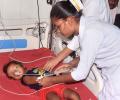
The government, every year, hides behind the mystery of the disease, linking it with litchis, and does not confess malnutrition as the prime cause, points out Mohammad Sajjad.

'INDIA will easily cross 50 seats out of 90 in Jammu and Kashmir.'
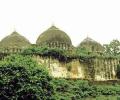
'The jurisprudence of a modern secular State has to be strictly rational.' 'Rather than aastha and aqeedah, our jurisprudence as well as the executive and legislature have to act in accordance with Constitutional rationality,' argues Mohammad Sajjad.
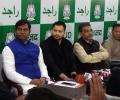
'The Mallahs may remain divided between the two competing coalitions in Bihar,' says Mohammad Sajjad.

Using the Jinnah portrait as an issue, and by demonising AMU and consequently Indian Muslims, the politics of communal polarisation is sought to be played out ahead of the Kairana Lok Sabha by-poll and to sustain it till the next Lok Sabha election, says Mohammad Sajjad.
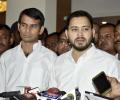
'The poor manner in which the RJD stitched its alliance and mismanaged its electioneering, now reveals that Tejashwi was more interested in enhancing his political stature by cutting down many senior leaders, by downsizing and shrinking RJD allies, by displaying arrogance and inaccessibility and by committing silly mistakes in candidate selection,' points out Mohammad Sajjad.

Muslims constitute 20% of UP's electorate. Currently, Muslim voters are divided between Akhilesh's SP and Mayawati's BSP. What will tilt the balance? Can Muslims back the winning party? Mohammad Sajjad explains the mysteries of UP's Muslim politics.
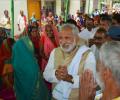
'It is the RJD, otherwise known for misgovernance, which has offered a candidate of clean and performing credentials, rather than the NDA,' points out Mohammad Sajjad.

Hamid Anasari's was not talking of reservation for the whole religious community to which he too happens to belong. Yet, sections of media chose to put words into his mouth and then subject him to the criticism he never deserved. This does not augur well for our media or democracy, says Mohammad Sajjad.

'Did the government learn any lesson from the disasters of 2008, 1987, 1975?' 'Certainly not!' 'They are making people believe that the 2017 flood was unexpected, so no preventive effort towards reducing the loss of human lives was to be expected from the government,' says Mohammad Sajjad.
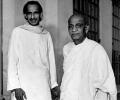
In an era when the misguided youth of today are trying to build political careers by subscribing to divisive ideologies, they need to look to independent thinking icons such as Acharya Kripalani, says Mohammad Sajjad.

'This is basically aimed at vilifying Nehruvian ideals.' 'Why?' 'Because, Nehruvian leadership is seen by Hindutva forces as the one which did not let them have their Hindu Raj.' 'The Hindutva proponents have always assumed that had Sardar become the first prime minister, India could never have become a secular State,' says Mohammad Sajjad.

The Hindutva brigade's silence on the rape may possibly be explained that this incident is an intra-Hindu affair for them. What is even more intriguing is that vocal gender activists have preferred to almost ignore the incident. Why? Is it because homosexual rape does not involve the woman either as victim or as aggressor, asks Mohammad Sajjad.

In the light of the efforts being made to forge electoral unity between scheduled castes and Muslims, Mohammad Sajjad examines what the architect of our Constitution, B R Ambedkar, had to say about the Muslim community.

'Communalism and communal riots happened in India only during and due to colonialism. Pre-colonial India didn't have this problem of communal conflicts and religious strife.'
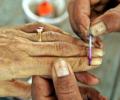
A total of 123 candidates, including seven ministers of Congress-National Conference coalition, eight former ministers and legislators are in fray for the Jammu and Kashmir's first phase of elections scheduled later this month.
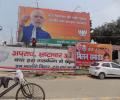
'The BJP has replaced huge portraits of the two BJP leaders from Gujarat with very small portraits of many leaders from Bihar. Much is being read into this changed tactic of hoardings and banners,' says Mohammad Sajjad.

'By resorting to divisive issues, the BJP is giving the impression that even if it is voted to power it won't do anything new to give Bihar a facelift. It will repel voters with the belief that the BJP can't do anything without communal polarisation as its core ideology. This is sad and unfortunate,' says Mohammad Sajjad.

The administration of the union territory as directed by the Jammu and Kashmir high court to make public land given under the controversial Roshni land scheme, since scrapped by a court, came out with the list of beneficiaries.

The 'secularists'are more adept at the politics of intense and alarmingly exaggerated fear-mongering, as this kind of politics provides easy votes of Muslims without making them answerable for the concrete issues of poverty, unemployment, lawlessness, and of basic needs like roads, electricity, etc, which is exactly how Nitish Kumar was defeated in the elections, says Mohammad Sajjad.
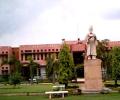
Attorney General Mukul Rohatgi's stand that AMU is not a minority university reveals the anti-minority stand of the political party now in power, says Mohammad Sajjad, outlining the long history behind one of India's premier universities.

Where do the big guns stand as counting underway for the Jammu and Kashmir and Jharkhand elections?
